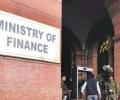
The finance ministry on Wednesday reimposed expenditure curbs on ministries and government departments for July-September quarter. There will be no spending restrictions on the ministries of health, rural development, agriculture, MSME (micro, small and medium enterprises) and railways as part of a two-pronged strategy. "The existing guidelines for expenditure control have been reviewed. "Keeping in view the evolving situation arising out of Covid-19 and anticipated cash position of the government, it is felt essential to regulate Quarterly Expenditure Plan (QEP)/Monthly Expenditure Plan (MEP) of specific ministries/departments for July-September, 2021," the Department of Economic Affairs in the finance ministry said in a notification.

'If it doesn't, it will continue with measures to infuse liquidity, signalling a new cycle,' predicts Tamal Bandyopadhyay.
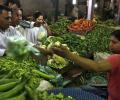
However, WPI inflation remained in double digit for the third consecutive month in July, mainly due to a low base of last year. WPI inflation was (-) 0.25 per cent, in July 2020. "The high rate of inflation in July 2021 is primarily due to low base effect and rise in prices of crude petroleum and natural gas; mineral oils; manufactured products like basic metals; food products; textiles; chemicals and chemical products etc as compared the corresponding month of the previous year," the commerce and industry ministry said in a statement.

It's spicy, buttery and utterly delicious.

'If the mandis were not working in Delhi, or the onion market in Nashik got affected, or there were disruptions because of unloading or loading in any sector in south India, we intervened.'

'The critical event signalling a new era for India was Dr Singh's 1991 Budget in which he quoted Victor Hugo to say that no power on earth could stop an idea whose time has come,' recalls T N Ninan.

Student bodies protested outside the Jamia Millia Islamia against what transpired at JNU and to demand that food choices cannot be imposed on people in the name of Ram Navami.

The 17 related ministries have been combined into seven different groups, including some infrastructure departments, in a bid to ensure synergy and better results.

Around 7.4 per cent of Indians aged 60 and above are affected by dementia. This number is expected to rise from the current 8.8 million to 17 million by 2036, marking a 97 per cent increase.

The wholesale price index (WPI)-based inflation rose in December at 0.73 per cent mainly due to a sharp rise in food prices. The WPI inflation was in the negative zone from April to October and had turned positive in November at 0.26 per cent.

Moody's Ratings on Tuesday said India's growing water shortage can disrupt farm and industry sectors and is detrimental to the credit health of the sovereign as rising food inflation and decline in income may spark social unrest. It said decreases in water supply can disrupt agricultural production and industrial operations, resulting in inflation in food prices and hence can be detrimental to credit health of sectors that heavily consume water, such as coal power generators and steel-makers.

The wholesale price-based inflation eased marginally to 12.07 per cent in June as crude oil and food items witnessed some softening in prices. However, WPI inflation remained in double digit for the third consecutive month in June, mainly due to a low base of last year. WPI inflation was (-) 1.81 per cent, in June 2020. Snapping the five straight months of uptick, the wholesale price index (WPI)-based inflation in June softened as prices of food articles and crude oil eased, even though manufactured products hardened.
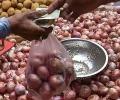
Wholesale inflation in the country rose marginally to 0.53 per cent in March compared to 0.20 per cent in the preceding month due to increase in prices of vegetables, potato, onion and crude oil. The Wholesale Price Index (WPI)-based inflation was in the negative zone from April to October and had turned positive in November at 0.26 per cent. The inflation in March 2023 was 1.41 per cent.

Late-stage diagnosis is a major issue, with over 75 per cent of cases being detected at advanced stages (50 per cent at Stage 3 and 25 per cent at Stage 4). This significantly reduces survival rates.
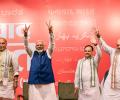
While there are some new faces in the cabinet, leaders such as BJP president JP Nadda and Jual Oram have returned as ministers.
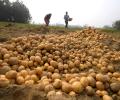
Amid the political blame game over Bengal's potato ban, which led to shortages in Jharkhand and Odisha, Uttar Pradesh farmers are the unlikely winners.

Union minister Chirag Paswan has caused a flutter by stating he would choose to give up his ministerial berth instead of a compromise on his principles, in keeping with the precedent set by his late father Ram Vilas Paswan.

Chief Minister N Chandrababu Naidu reviewed the weather situation with senior officials and asked them to incorporate technologies such as drones to assess the deluge and accordingly plan the relief works.
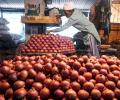
The government on Saturday lifted the ban on onion exports but imposed a minimum export price (MEP) of $550 per tonne, amid ongoing Lok Sabha elections in the country. Last night, the government imposed a 40 per cent duty on export of onions. In August last year, India had imposed a 40 per cent export duty on onions up to December 31, 2023.

The wholesale price index (WPI)-based inflation eased in January to 0.27 per cent, mainly due to moderation in prices of food items. WPI inflation was at 0.73 per cent in December 2023. The WPI inflation was in the negative zone from April to October and had turned positive in November at 0.39 per cent.

The strong message from the prime minister is of continuity of policies he considers right with strong emphasis on execution, points out T N C Rajagopalan.

Wholesale inflation rate declined marginally to 0.2 per cent in February compared to 0.27 per cent in the preceding month despite a slight uptick in the food basket. The Wholesale Price Index (WPI)-based inflation was in the negative zone from April to October and had turned positive in November at 0.26 per cent. The inflation in February 2023 was 3.85 per cent.

The PMO has sought a report from the Union home ministry on the complaint by BSF jawan Tej Pratap Yadav.

The wholesale price-based inflation rose to 2.03 per cent in January, 2021, even as food prices cooled. The WPI inflation was 1.22 per cent in December, 2020 and 3.52 per cent in January last year. While food articles saw softening in inflation in January, manufactured items witnessed hardening of prices, as per data released by the Commerce and Industry ministry.

The TIME 100 AI list is an interesting assortment of titans. Indians make up about 20 per cent of the coveted list, which is pretty commendable, notes Sandeep Goyal.

Shiv Sena-Uddhav Balasaheb Thackeray leader Priyanka Chaturvedi on Wednesday took potshots at the rival Shiv Sena over its minister not finding a place in the reconstituted NITI Aayog.

K Natwar Singh wore many hats as he straddled the worlds of diplomacy, politics and writing but what remained consistent across decades was his sharp-wit and plainspeaking.

With rising incomes, education, and health awareness in India, especially in the big cities, droves of people are saying no to sugar.

In May 2019, the food inflation was 1.83 per cent as per the full CPI data released for that period.
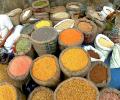
Prices of food items like cereals, pulses, and edible oils rose or remained steady in May, a Reserve Bank of India (RBI) report said, indicating there could be another higher inflation print. However, it observed that the Monetary Policy Committee's (MPC's) surprise move to increase interest rates bodes well for its credibility. The RBI's monthly State of the Economy report, released on Tuesday, citing high frequency food price data from the Ministry of Consumer Affairs for the period May 1-12, said the increase in the prices of cereals was primarily because of the surge in wheat prices.

The leaders also noted the "negative impacts" of the war in Ukraine with regard to global food and energy security, especially for developing and least-developed countries.

Allegations also cropped up against the local BJP MP that he did not respond to the SOS calls from the stranded students, a charge denied by the elected representative.

The home minister said the central forces deployment will be increased, if required, and that they should be deployed strategically to restore peace and tranquillity in the state, according to an official statement.

Wholesale price-based inflation rose to an eight-month high of 0.26 per cent in November, driven by a sharp jump in food prices, especially onion and vegetables. The WPI inflation was in the negative or deflationary zone for the past seven months since April and was at (-)0.52 per cent in October. The last positive WPI inflation was recorded in March at 1.41 per cent.

'The nominal GDP growth assumption for FY25 may be revised upwards on higher growth expectations.'

The spokesperson said India has "always advocated constructive, solution-oriented, and practical engagement with all stakeholders to achieve a negotiated settlement to this conflict".

Industry clueless about implementing labelling ru#8804 FSSAI dithers over regulations.
The wholesale price index-based inflation remained in the negative territory for the seventh straight month in October at (-) 0.52 per cent, on easing prices of food items. The WPI-based inflation rate has been in the negative zone since April and was at (-) 0.26 per cent in September, 2023. In October last year, WPI was at 8.67 per cent.

The commerce ministry has recommended the continuation of anti-dumping duty on a Chinese chemical used in food and pharma industry with a view to guard domestic players from cheap imports. In a notification, the ministry's investigation arm, the Directorate General of Trade Remedies (DGTR), has said there is a "positive" evidence of likelihood of dumping of Sodium Citrate and injury to the domestic industry if the existing anti-dumping duty were to be removed.
India's industrial production growth slowed to 3.8 per cent in January, while the February retail inflation at 5.09 per cent remained within the Reserve Bank's comfort zone for the sixth straight month, according to the latest government data. Growth in factory output, based on the Index of Industrial Production (IIP), slowed to 3.8 per cent in January 2024, mainly due to poor performance of manufacturing, mining and power sectors, according to the data released by the Ministry of Statistics & Programme Implementation.
